

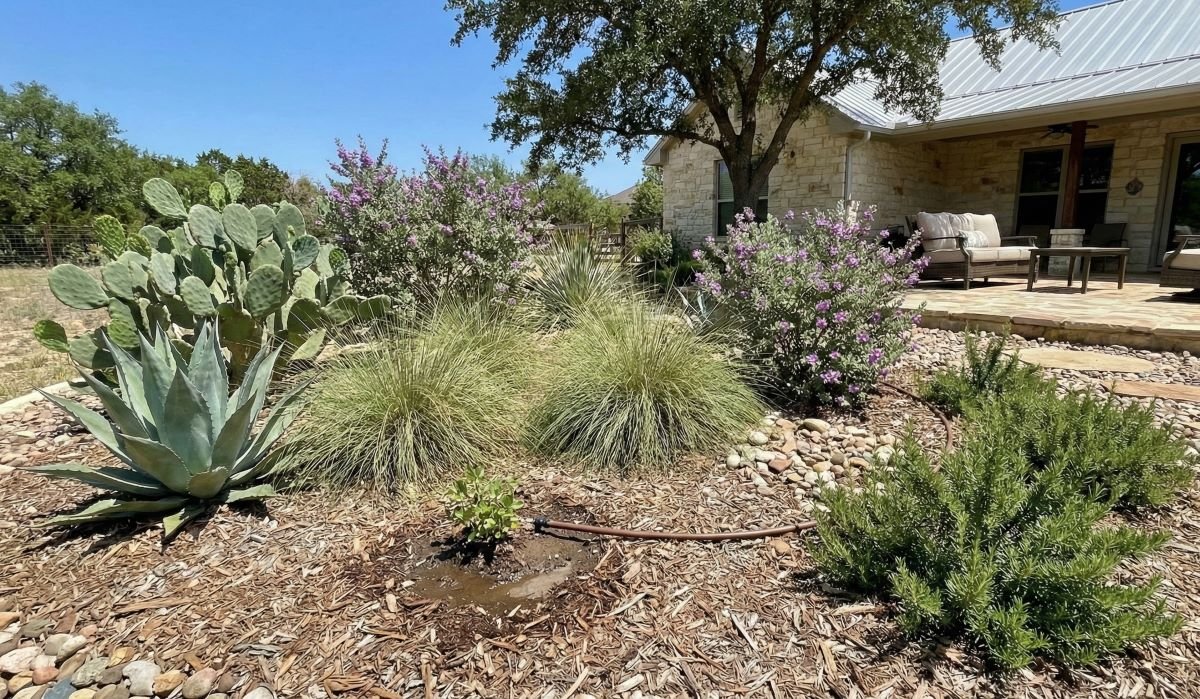

“Drought-tolerant” has become landscaping buzzword in Central Texas, but many homeowners discover their supposedly water-wise gardens still struggle during dry spells or require more irrigation than expected. True drought tolerance involves far more than simply planting cacti and hoping for the best.
Drought-tolerant landscapes in College Station – Bryan, TX and surrounding areas combine appropriate plant selection, soil improvement, strategic design, and efficient water management creating outdoor spaces that thrive with minimal supplemental water. Here’s what Dickerson Landscaping has learned creating genuinely water-wise landscapes throughout the Brazos Valley.
Understanding Central Texas Drought Conditions
Central Texas presents unique challenges beyond simple lack of rainfall—understanding these conditions guides effective drought-tolerant design.
Regional drought characteristics:
Intense summer heat with temperatures exceeding 100°F for weeks stresses plants even when soil moisture exists. Heat tolerance matters as much as water efficiency.
Unpredictable rainfall patterns mean feast-or-famine conditions—spring floods followed by summer drought requiring plants handling both extremes.
Clay soil prevalent throughout College Station holds water when saturated but becomes concrete-hard when dry, creating root penetration challenges.
High evaporation rates during Texas summers mean water disappears quickly from soil surface and plant leaves, requiring specific adaptations.
True drought tolerance addresses all these factors, not just reduced water needs alone.
Native and Adapted Plant Selection
Plant choices form the foundation of drought-tolerant landscaping—wrong selections doom even the best designs to failure or constant irrigation dependence.
Truly drought-tolerant plants for the region:
Native Texas plants evolved handling local conditions naturally. Yaupon holly, Texas sage, flame acacia, and Turk’s cap thrive with minimal water once established.
Adapted species from similar climates perform well here. Mediterranean plants like rosemary, lavender, and ornamental sages handle heat and drought excellently.
Native grasses including Gulf muhly, inland sea oats, and Mexican feathergrass provide texture while needing far less water than traditional lawn grasses.
Succulents and agaves offer architectural interest with minimal water needs, though freezes occasionally damage non-hardy selections.
Avoid plants requiring consistent moisture—sod lawns, hydrangeas, and tropical species—which undermine drought-tolerant goals regardless of other water-saving measures throughout Bryan properties.
Soil Improvement for Water Retention
Central Texas clay soils need amendment supporting drought tolerance rather than fighting natural characteristics.
Soil strategies for drought resistance:
Organic matter addition through compost improves water-holding capacity and root penetration in clay, helping plants access available moisture efficiently.
Mulch application (3-4 inches) reduces evaporation dramatically—perhaps the single most important drought-tolerant technique available.
Soil depth consideration during grading and bed preparation ensures adequate root zone depth supporting plant establishment.
Avoid excessive amendment that creates moisture pockets surrounded by clay—gradual transitions work better than dramatic soil replacement.
Professional grading services and soil preparation during landscape design & installation set drought-tolerant landscapes up for success from the start.
Strategic Landscape Design Principles
How you arrange plants and features affects water needs as much as what you choose.
Water-wise design strategies:
Hydrozoning groups plants by water needs—keeping thirsty plants near irrigation sources while placing drought-tolerant species in dry zones reduces overall water use.
Microclimate exploitation uses shaded areas, wind protection, and moisture-collecting spots strategically, placing plants where conditions suit their needs naturally.
Hardscape expansion through patio installation, stone landscaping, and rocks reduces area requiring water while adding functional outdoor spaces.
Lawn reduction replaces water-hungry grass with xeriscaping beds, groundcovers, or hardscapes cutting water demand substantially.
Windbreak placement using tree landscaping reduces moisture loss from wind desiccation throughout exposed sites.
These landscape design principles multiply the benefits of drought-tolerant plant choices.
Efficient Irrigation Systems
Truly drought-tolerant landscapes still need water during establishment and extreme drought—but efficient delivery systems minimize requirements.
Water-efficient irrigation approaches:
Drip irrigation delivers water directly to root zones with minimal evaporation loss—far superior to spray systems for xeriscaping beds.
Smart controllers adjust watering based on weather, soil moisture, and seasonal needs preventing waste during rainy periods or cool weather.
Zone-specific programming allows different watering schedules for lawn areas, drought-tolerant beds, and high-water zones.
Rain sensors prevent unnecessary watering, crucial features for sprinkler & irrigation systems in areas with unpredictable rainfall.
Establishment watering plans provide adequate moisture during the critical first year, then gradually reduce supplemental water as roots establish throughout College Station landscapes.
Maintenance Practices Supporting Drought Tolerance
How you maintain landscapes affects water needs as much as design and plant choices.
Water-wise maintenance:
Deep, infrequent watering encourages deep root growth accessing moisture unavailable to shallowly rooted plants with frequent light watering.
Mulch replenishment maintains the 3-4 inch depth protecting soil from evaporation as mulch decomposes over time.
Proper pruning removes dead material and maintains healthy plant structure without encouraging excessive water-demanding new growth.
Weed control eliminates competition for limited water during drought periods—regular landscape maintenance keeps weeds from stealing moisture.
Seasonal adjustment of irrigation schedules accounts for changing water needs as temperatures and rainfall patterns shift.
Fertilization restraint prevents excessive growth requiring more water—drought-tolerant plants often need less fertilizer than traditional landscapes.
Common Drought-Tolerant Landscape Mistakes
Many well-intentioned drought-tolerant landscapes fail through common errors undermining water-wise goals.
Mistakes to avoid:
Insufficient establishment watering kills plants before they develop drought resistance—first-year irrigation remains crucial even for drought-tolerant species.
Poor soil preparation leaves plants struggling in unimproved clay despite being theoretically drought-tolerant.
Inadequate mulch allows rapid moisture loss defeating careful plant selection.
Mixed hydrozones placing water-needy and drought-tolerant plants together forces overwatering drought-tolerant species or underwatering thirsty ones.
Unrealistic expectations about zero-water landscapes—even native Texas plants need occasional supplemental water during extreme drought.
Dickerson Landscaping helps homeowners throughout Bryan, College Station, and the Brazos Valley avoid these pitfalls through proper landscape design & installation and realistic guidance about true drought tolerance.
Create Genuinely Drought-Tolerant Landscapes
True drought tolerance in Central Texas comes from integrated approaches—appropriate plants, improved soil, strategic design, efficient irrigation, and proper maintenance working together creating landscapes thriving despite heat and limited rainfall.
Understanding what genuinely makes landscapes drought-tolerant helps homeowners invest wisely in water-wise outdoor spaces that actually deliver on promises of reduced water needs and lower maintenance.
Dickerson Landscaping, LLC specializes in authentic drought-tolerant landscapes throughout the region, combining xeriscaping expertise, native plant knowledge, and efficient irrigation design creating beautiful outdoor spaces suited to Texas conditions.
Ready to create truly drought-tolerant landscaping? Call (979) 282-3469 to discuss water-wise solutions for your property.