

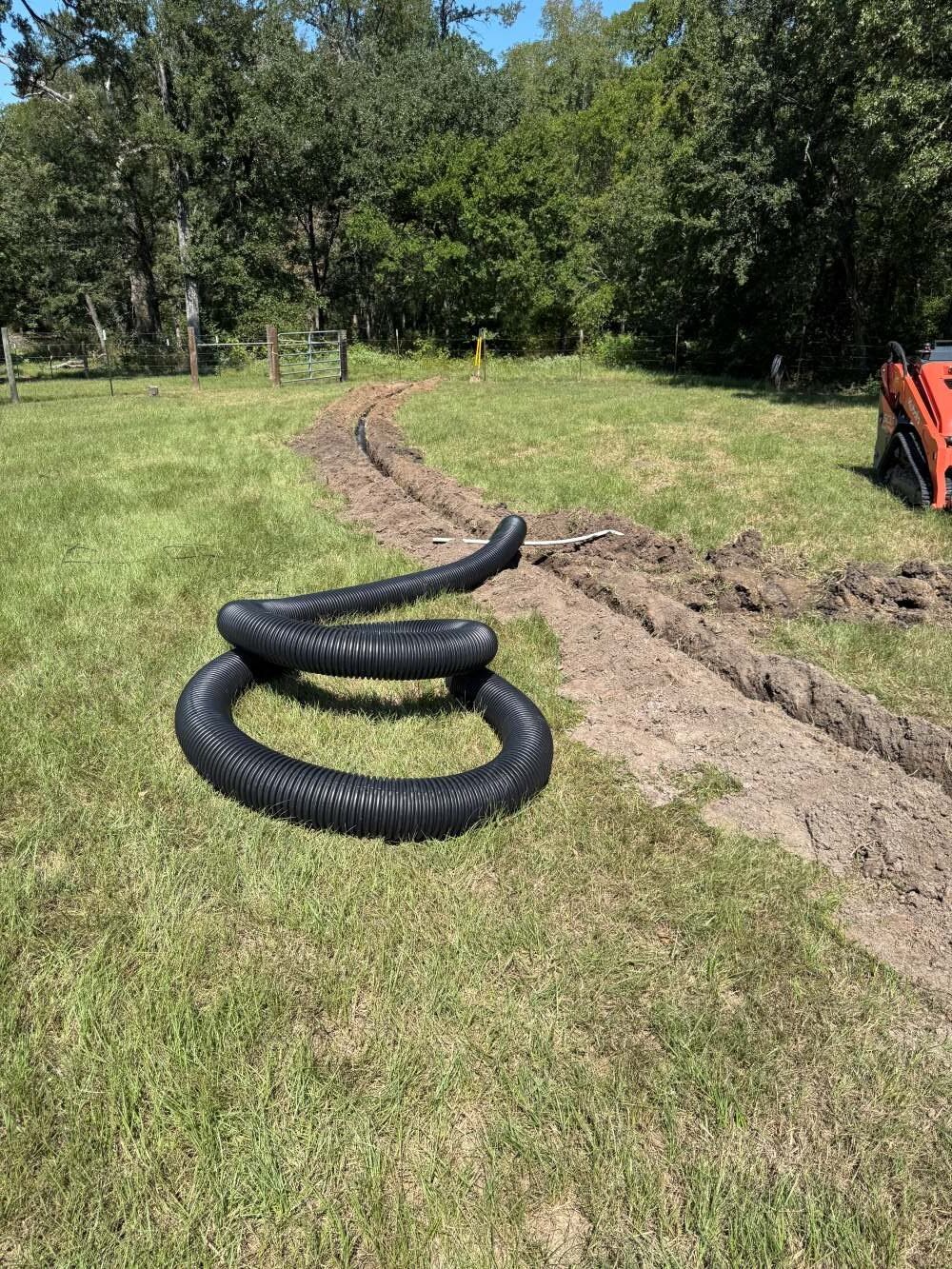

Standing water, soggy areas, and persistent drainage problems plague many properties, damaging lawns, landscaping, and potentially threatening building foundations. These images document a professional drain installation that addresses serious drainage issues through proper excavation, quality materials, and expert grading. The project showcases the equipment, techniques, and processes involved in creating effective subsurface drainage systems that redirect water away from problem areas.
Understanding how drains work and what proper installation entails helps property owners make informed decisions when facing drainage challenges. The difference between amateur attempts and professional execution becomes evident in long-term performance and problem resolution.
Recognizing the Need for Drain Systems
The excavated trenches visible in these images indicate significant drainage problems requiring professional intervention. drains become necessary when surface grading alone cannot adequately manage water flow, when soil conditions prevent proper percolation, or when water consistently accumulates in specific areas causing damage or unusability. The scope of this project suggests widespread drainage issues affecting multiple areas of the property.
Rural and suburban properties with large yards often face drainage challenges from roof runoff, slope changes, or water concentrating from uphill areas. Without proper management, this water erodes soil, kills vegetation, creates muddy areas, and can even undermine structures. drains provide subsurface solutions that intercept and redirect water before it causes visible problems.
Equipment Requirements for Major Drainage Projects
The heavy equipment visible in these images demonstrates the scale and professional approach necessary for effective drain installation. The compact track loader efficiently excavates trenches to proper depth while minimizing lawn damage compared to larger equipment. The mini excavator provides precision digging for areas requiring careful work around existing features or utilities.
Professional contractors invest in appropriate equipment that allows efficient project completion while maintaining quality standards. The tractor and dump truck visible in the background handle material transport and site cleanup. This level of equipment commitment separates professional drainage contractors from handyman services attempting drainage work with inadequate tools.
Trench Excavation and Planning
The curved trench pattern visible in the first image shows strategic planning that follows natural water flow patterns across the property. drains work best when installed along the path water naturally wants to travel, intercepting flow and directing it to appropriate discharge points. The depth and width of excavation must accommodate drainage pipe, gravel bedding, and adequate cover material.
Proper trench layout considers multiple factors including slope, discharge locations, and integration with existing drainage features. The yellow utility marking visible in one image indicates proper precautions were taken to identify underground utilities before excavation began. This essential safety step prevents dangerous and costly damage to buried electric, gas, water, or communication lines.
Corrugated Drainage Pipe Selection
The black corrugated pipe coiled in the first image represents the core component of the drain system. This perforated pipe collects water seeping through surrounding gravel and channels it toward discharge points. The corrugated design provides flexibility for navigating curves while maintaining structural integrity under soil pressure. Quality drainage pipe resists crushing, remains flexible in cold weather, and features properly sized perforations for optimal water collection.
Pipe sizing depends on the volume of water the system must handle and the distance to discharge points. Larger diameter pipes move more water but require wider trenches and more gravel. Professional assessment determines appropriate pipe specifications for each project’s unique conditions and requirements.
Proper Gravel Selection and Application
drain effectiveness depends heavily on the gravel surrounding the perforated pipe. Clean, angular stone without fines allows water to flow freely while preventing soil from clogging pipe perforations. The gravel visible in these construction photos appears to be appropriate drainage stone that will facilitate water movement while filtering out soil particles.
Installation sequence matters significantly. Gravel is placed in the trench bottom, pipe is laid on this bedding layer, then additional gravel surrounds and covers the pipe. The depth of gravel coverage affects system performance, with adequate coverage ensuring water entering from above reaches the pipe while preventing soil contamination of the stone layer.
Managing Excavated Soil and Site Restoration
The piles of excavated soil visible throughout these images represent material that must be properly managed during and after installation. Some soil will backfill over the gravel layer, while excess material may need removal from the site. The reddish-brown clay soil characteristic of Texas presents specific challenges, as its poor drainage properties often contribute to the problems drains are installed to solve.
Proper compaction of backfill prevents settling that creates depressions along drain routes. Professional contractors understand appropriate compaction techniques and material selection for backfill layers. The final surface should blend seamlessly with surrounding terrain while maintaining proper grades for surface water management.
Multiple Equipment Coordination
The image showing multiple pieces of equipment and workers demonstrates the coordination required for efficient project execution. The tractor, skid steer, mini excavator, and support vehicles each serve specific purposes during installation. This multi-equipment approach allows simultaneous work on different project phases, reducing overall completion time while maintaining quality.
Professional project management ensures equipment and crews work efficiently without interfering with each other. Material delivery timing, excavation sequencing, and site logistics all require planning and coordination that experienced drainage contractors handle routinely but amateur attempts often botch.
Discharge Point Planning
Effective drains must discharge collected water to appropriate locations where it won’t cause new problems. Common discharge points include storm sewers, drainage ditches, low areas away from structures, or even retention ponds. The property layout visible in these images suggests water will be directed toward the perimeter or existing drainage features.
Discharge locations require careful consideration of property boundaries, neighboring properties, and local regulations. Some municipalities prohibit discharging drainage onto adjoining properties or into certain water bodies. Professional contractors understand these requirements and plan systems that comply with regulations while effectively managing water.
Integration with Existing Landscape Features
The trees, fencing, and established lawn visible in these images represent existing features that must be worked around during installation. Tree root systems require careful navigation to avoid damage that could harm tree health or compromise drain function. Fence lines, utility easements, and property boundaries all constrain drain routing options.
Experienced contractors assess sites comprehensively before beginning work, identifying obstacles and planning routes that achieve drainage objectives while preserving valuable landscape features. This pre-planning prevents conflicts that arise when drainage routes are improvised during installation rather than carefully mapped beforehand.
Long-Term Performance and Maintenance
Properly installed drains can function effectively for decades with minimal maintenance. The primary maintenance involves keeping discharge points clear and preventing soil erosion that could expose or damage pipes. Occasional inspection ensures the system continues operating as designed and identifies any issues before they become serious problems.
Over time, silt and sediment may accumulate in drain pipes despite gravel filtration. Systems experiencing reduced performance may benefit from professional cleaning that flushes accumulated material from pipes. This maintenance extends system life and restores full drainage capacity.
Professional Installation Value
drain installation involves more complexity than many property owners realize. Proper assessment, equipment operation, material selection, and installation techniques all require expertise that professional contractors provide. Dickerson Landscaping brings comprehensive knowledge to drainage projects throughout Bryan and College Station, TX, ensuring systems are designed and installed for optimal performance.
Quality drainage contractors assess properties thoroughly, recommend appropriate solutions, handle permitting if required, and complete installations that solve problems rather than creating new ones. For property owners struggling with drainage issues, professional consultation identifies root causes and implements effective solutions. Contact Dickerson Landscaping at 979-282-3469 for expert drainage system design and installation.