

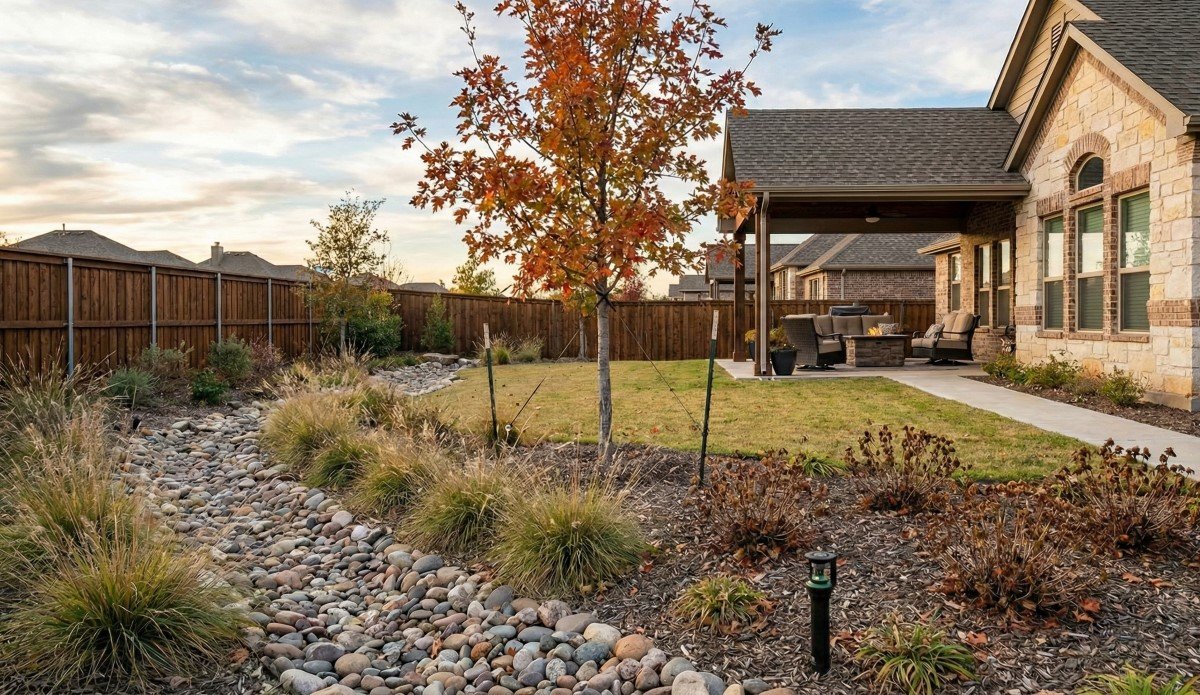

Beautiful landscape design in College Station – Bryan, TX requires more than aesthetic vision—it demands understanding how seasonal weather patterns affect plant survival, soil conditions, and outdoor feature performance throughout the year. What works beautifully in spring can struggle by August, and designs that ignore Texas summer heat or winter freezes inevitably disappoint.
Smart landscape design anticipates seasonal challenges, selecting plants and materials that thrive through Brazos Valley’s weather extremes rather than merely surviving them. Here’s how Dickerson Landscaping approaches design with seasonal weather realities in mind.
Understanding Brazos Valley’s Seasonal Patterns
Bryan-College Station experiences distinct seasonal weather patterns that stress landscapes differently throughout the year. Summer brings intense heat (often 95-105°F), high humidity, and occasional drought periods. Fall provides mild, pleasant conditions ideal for planting. Winter includes occasional freezes (20-30°F) and unpredictable temperature swings. Spring delivers heavy rainfall, severe thunderstorms, and rapid temperature changes.
These seasonal extremes mean landscape design must account for plants enduring 80+ degree temperature swings, drought tolerance for rainless summer stretches, and freeze resilience for occasional hard winters.
Dickerson Landscaping designs with these realities front and center, choosing plant palettes and materials proven to handle Brazos Valley conditions rather than fighting against local climate patterns.
Summer Heat and Drought Considerations
Texas summer heat represents the most demanding seasonal challenge for Bryan landscapes. Temperatures consistently exceeding 95°F, combined with weeks without rain, kill poorly chosen plants and turn lawns brown.
Design strategies for summer survival:
- Drought-tolerant plant selection including native species adapted to Texas heat
- Mulch application (3-4 inches) reducing soil temperature and moisture loss
- Strategic shade planning using trees and structures to protect heat-sensitive plants
- Efficient irrigation systems delivering water directly to roots rather than evaporating
- Hardscaping expansion reducing lawn areas requiring constant watering
- Heat-resistant materials for patios and walkways that don’t become unbearably hot
Plants that flourish in spring often struggle once seasonal heat arrives. Landscape design must prioritize summer toughness over spring beauty—or accept replanting as seasonal temperatures change.
College Station properties emphasizing native and adapted plants handle summer stress far better than those featuring plants suited to cooler, wetter climates.
Managing Seasonal Rainfall Extremes
Brazos Valley landscapes face feast-or-famine precipitation patterns—spring storms dump inches in hours, while summer brings weeks without measurable rain. Landscape design must handle both extremes without erosion or flooding.
Rainfall management strategies include:
- Proper grading directing water away from structures during heavy spring rains
- Rain gardens capturing and filtering stormwater in low areas
- Permeable surfaces allowing water infiltration rather than runoff
- Drainage systems preventing standing water that drowns plants or breeds mosquitoes
- Drought-resistant plant zones surviving summer dry periods
- Mulch and soil amendments improving water retention during dry spells
Seasonal weather variations mean irrigation needs shift dramatically—what requires daily watering in August needs none during March. Smart design accommodates these swings through zoned irrigation and plant groupings with similar water needs.
Winter Weather and Freeze Protection
While Bryan-College Station winters stay mild compared to northern climates, seasonal freezes still damage unprepared landscapes. Hard freezes kill tropical plants, crack poorly chosen hardscaping materials, and stress even cold-hardy species during extreme events.
Winter-ready landscape design:
- Cold-hardy plant selection surviving occasional 20°F nights
- Microclimate utilization placing tender plants near structures or in protected areas
- Freeze-tolerant materials for patios, walkways, and water features
- Proper plant placement keeping tropicals in containers that move indoors
- Mulch insulation protecting roots during cold snaps
Seasonal temperature swings—70°F one week, 25°F the next—stress plants more than consistent cold. Texas landscape design must account for these fluctuations rather than assuming steady winter conditions.
Seasonal Maintenance Planning
Different seasons demand different maintenance tasks, and landscape design can either minimize or multiply this workload depending on choices made upfront.
Spring requires pruning, mulching, planting, and preparing irrigation systems. Summer focuses on watering management, pest control, and protecting stressed plants. Fall offers ideal planting conditions and prep work for winter. Winter involves protecting tender plants, clearing storm debris, and planning next year’s improvements.
Design choices affecting seasonal maintenance:
- Native plant emphasis reducing fertilization, pest control, and replacement needs
- Appropriate lawn sizing limiting mowing, edging, and watering demands
- Mulched beds suppressing weeds and moderating soil temperature
- Automated irrigation reducing manual watering workload
- Hardscaping integration creating low-maintenance areas requiring no seasonal care
Dickerson Landscaping helps Bryan homeowners design landscapes that look great while respecting realistic time commitments for seasonal maintenance throughout the year.
Selecting Plants for Year-Round Interest
Seasonal weather changes shouldn’t mean your landscape looks great three months and terrible the rest. Strategic plant selection creates visual interest across all seasons despite Texas climate challenges.
Year-round design strategies:
- Evergreen foundation plants providing structure regardless of season
- Seasonal bloomers timed for different months ensuring continuous color
- Textural variety from grasses, succulents, and foliage plants
- Native trees offering spring flowers, summer shade, fall color, winter structure
- Hardscaping features maintaining beauty when plants go dormant
For College Station landscapes, this means combining heat-loving summer bloomers like lantana with cool-season pansies, backed by evergreen shrubs and ornamental grasses providing interest year-round.
Avoid designs dependent on single-season stars that leave landscapes bare or unattractive most of the year.
Material Selection for Seasonal Extremes
Hardscaping materials face seasonal weather stress too—Texas heat expands and contracts surfaces, freezes crack poorly chosen stone, and humidity encourages mold on inappropriate wood products.
Weather-appropriate material choices:
- Concrete and natural stone handling temperature swings without cracking when properly installed
- Composite decking resisting Texas heat, humidity, and UV exposure better than untreated wood
- Permeable pavers managing both heavy rain and drought conditions
- UV-resistant fabrics for shade structures withstanding intense summer sun
- Rust-resistant metals for outdoor furniture and features in humid climate
Seasonal weather in Brazos Valley punishes cheap materials quickly. Investing in quality products appropriate for Texas conditions saves money long-term through reduced replacement and maintenance costs.
Design Your Landscape for Texas Seasons
Successful landscape design in Bryan-College Station works with seasonal weather patterns rather than fighting them. Understanding local climate extremes, choosing appropriate plants and materials, and planning for year-round beauty creates landscapes that thrive rather than merely survive.
Whether you’re planning comprehensive landscape renovation or targeted improvements, considering seasonal impacts upfront prevents expensive mistakes and ensures long-term satisfaction.
Dickerson Landscaping, LLC brings decades of experience designing landscapes specifically for Brazos Valley’s seasonal weather challenges. We understand which plants flourish here, what materials last, and how to create outdoor spaces that look great and perform well throughout Texas climate extremes.
Ready to discuss landscape design that embraces seasonal realities? Call (979) 282-3469 to explore options suited to your property and our unique climate.